What a master plan settles
A master plan answers the questions no single building can. Where the road runs, how large each lot is, how far potable water, wastewater, storm drainage and electrical distribution have to reach, what stays forest and what gets cleared; these are decided once, for the whole property, and every building that follows inherits them. On the projects below, the Papagayo PM & Development scope runs from site analysis and land use through master plan and urban design, infrastructure construction documents, and permitting through the CFIA and SETENA.
The projects on this page
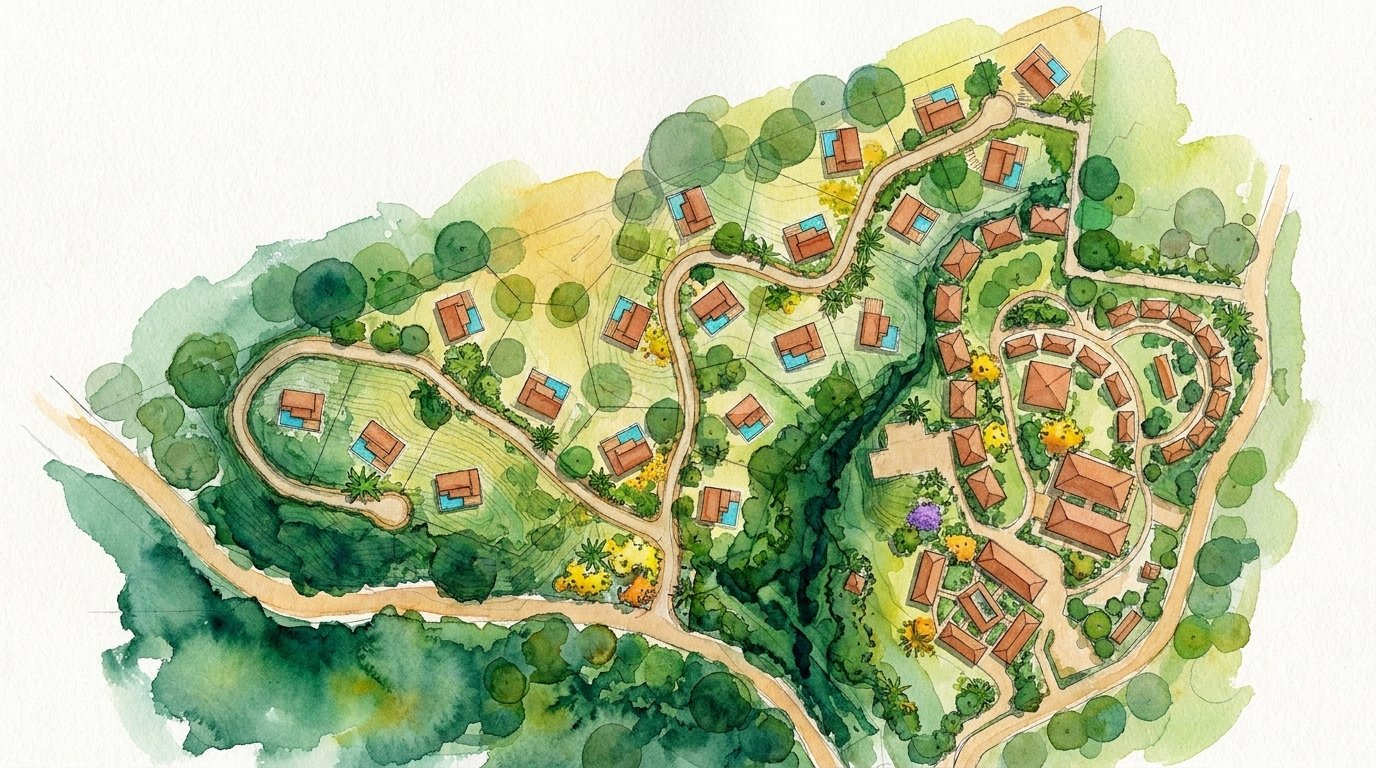
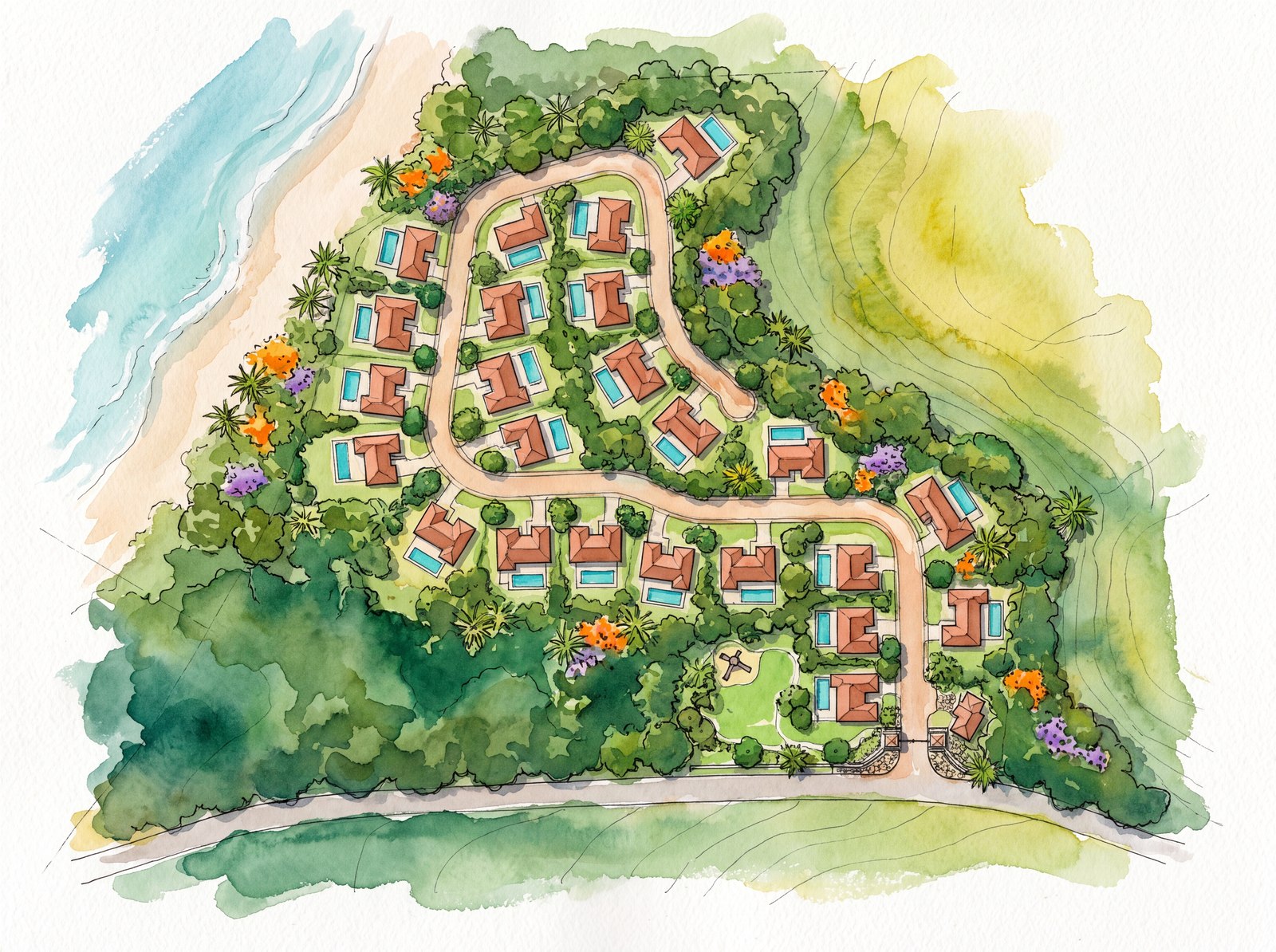
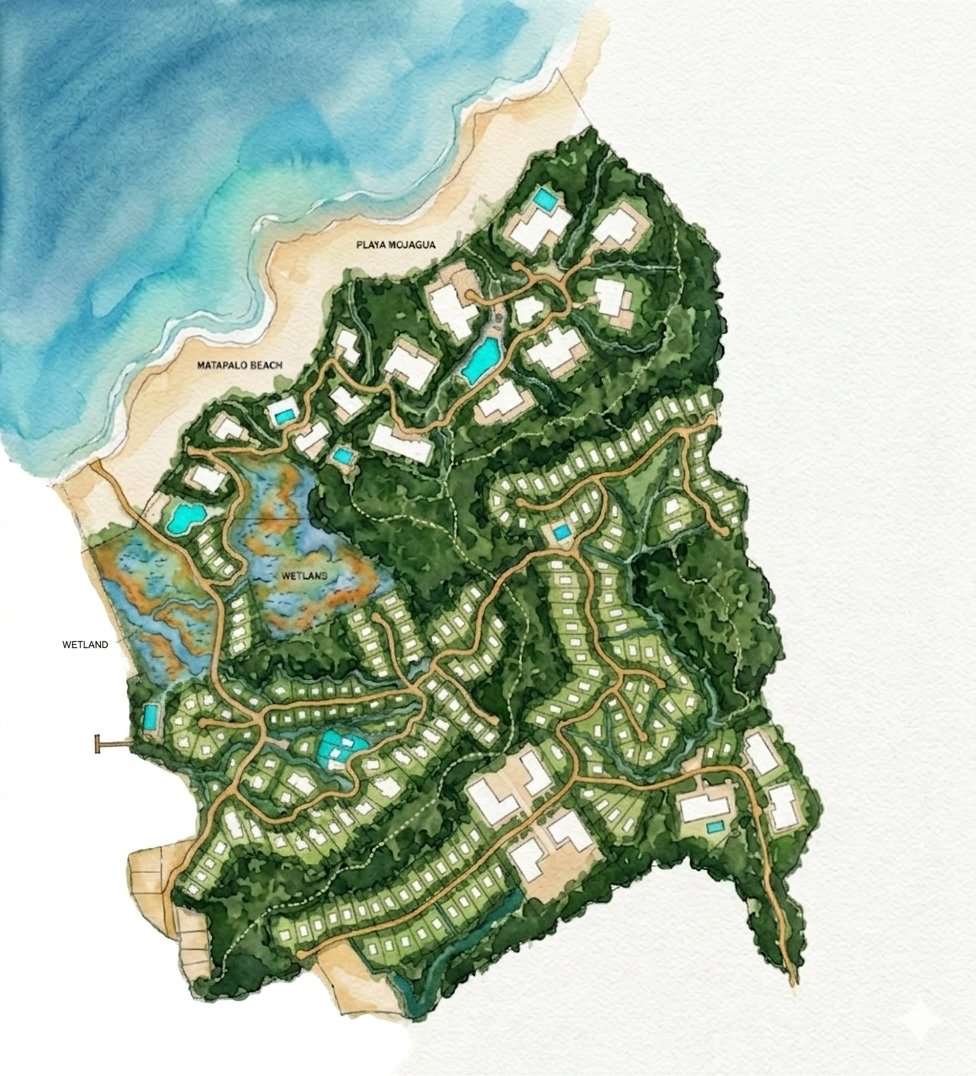
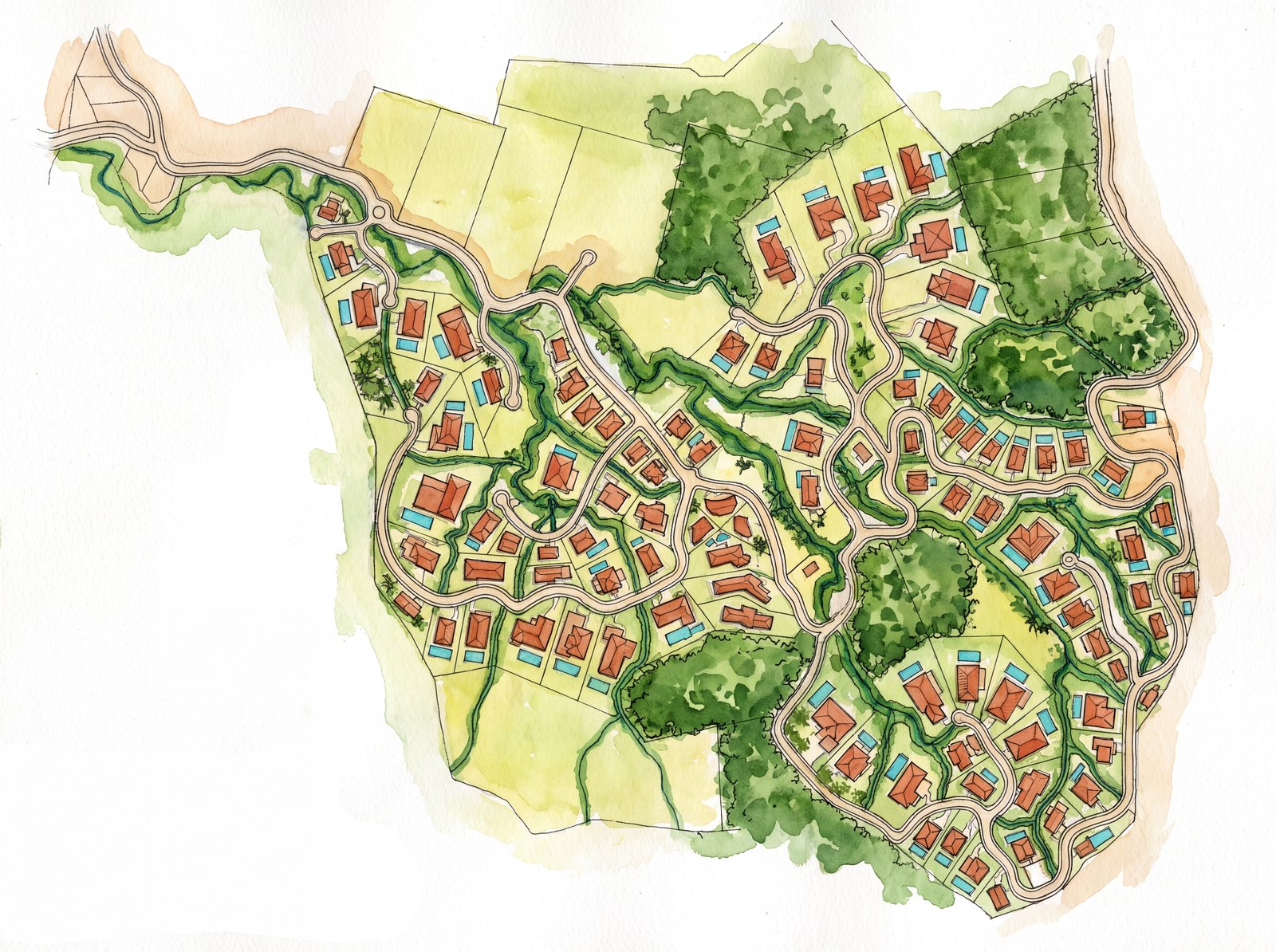
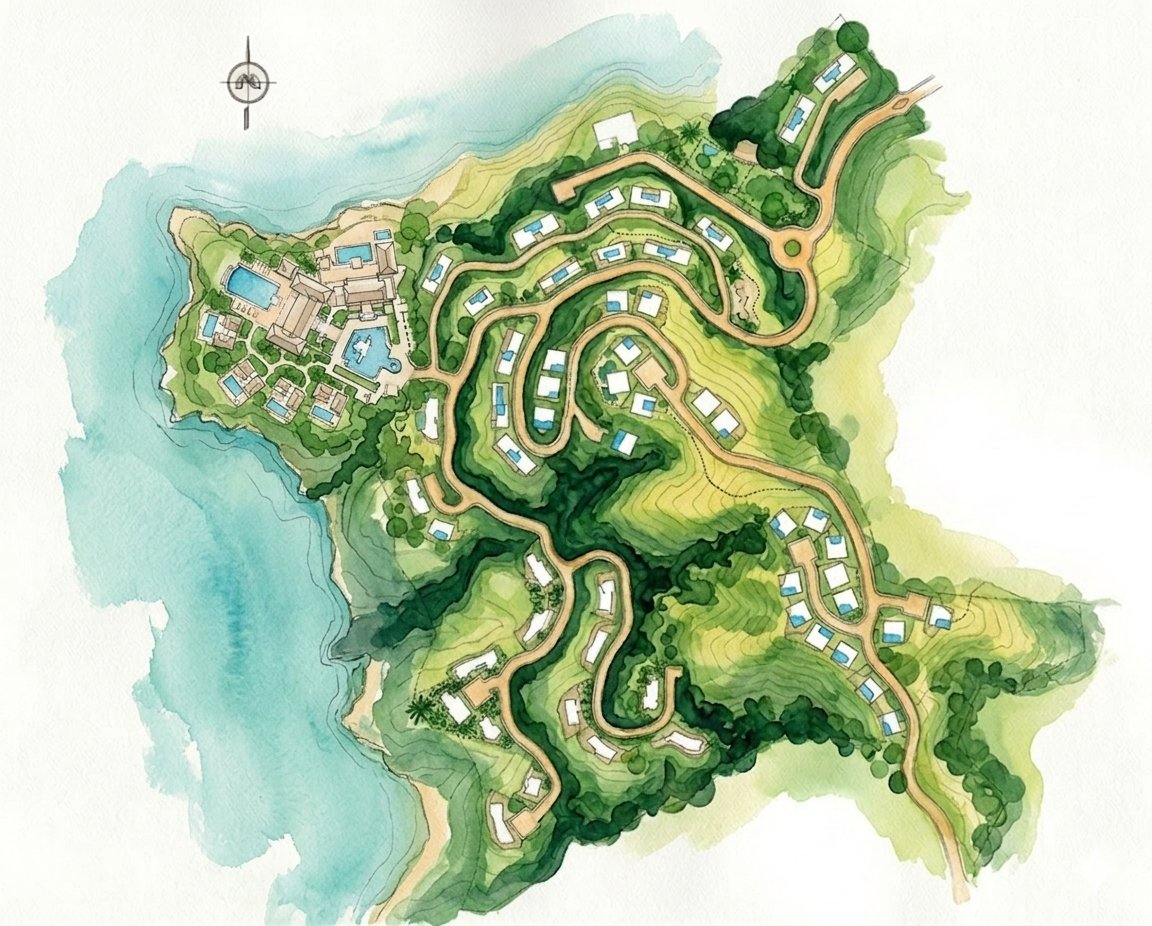
They range from six hectares to three hundred. El Diamante at Playa Matapalo is the largest: 309 hectares planned around 195 lots, three hotel sites, two beach clubs and 10,702 linear metres of internal road. La Montaña, near Playas del Coco, is a 121-hectare horizontal residential condominium of 130 lots with full infrastructure. La Punta de Papagayo sits inside the Polo Turístico de Papagayo and carries three products on one site: 102 hotel rooms, 87 condominiums and 24 estate lots. Mar Serena master-plans 287 hectares of Cabo Velas coastline for four beach resorts, 310 condominium units and 250 lots.
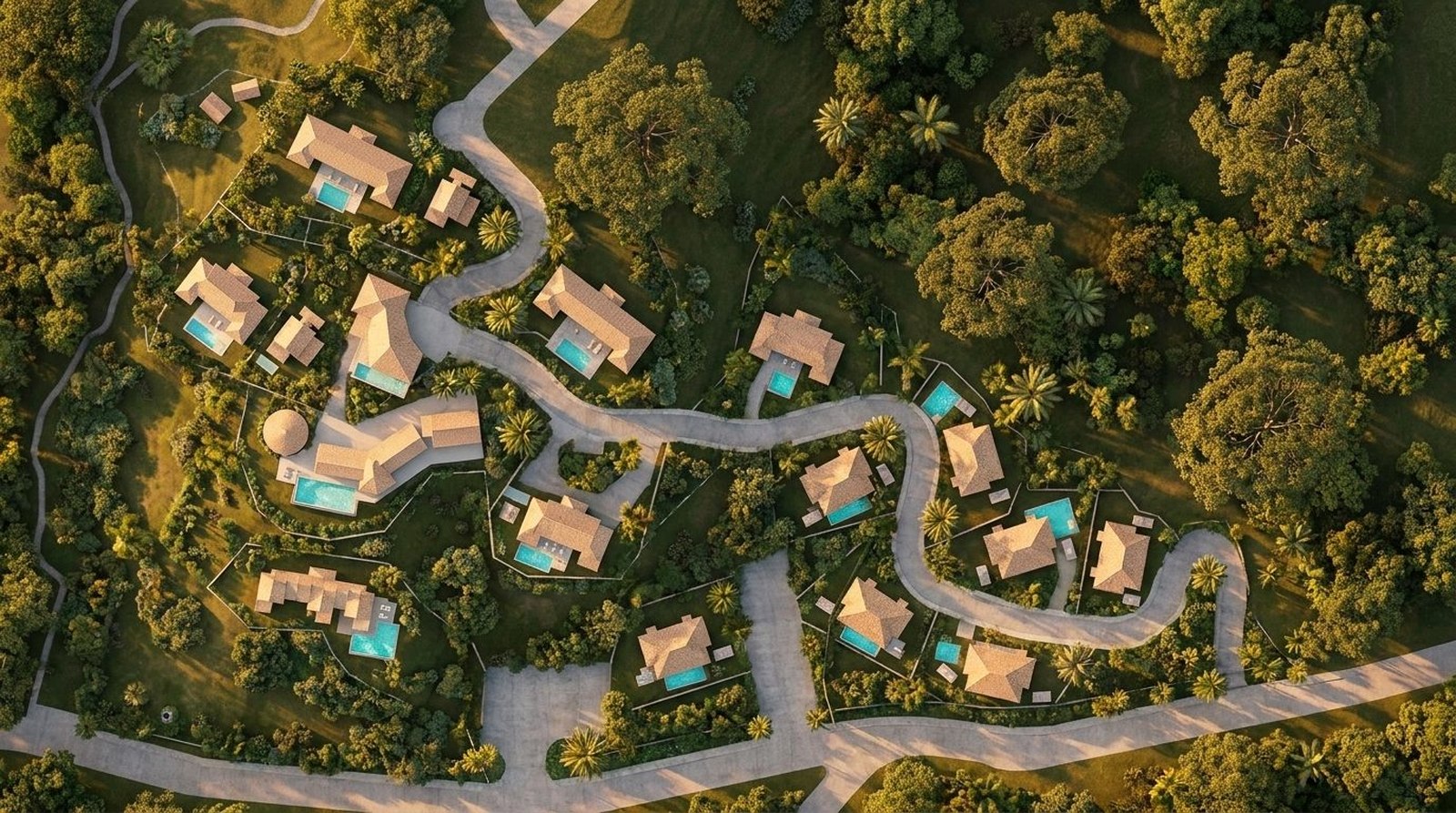
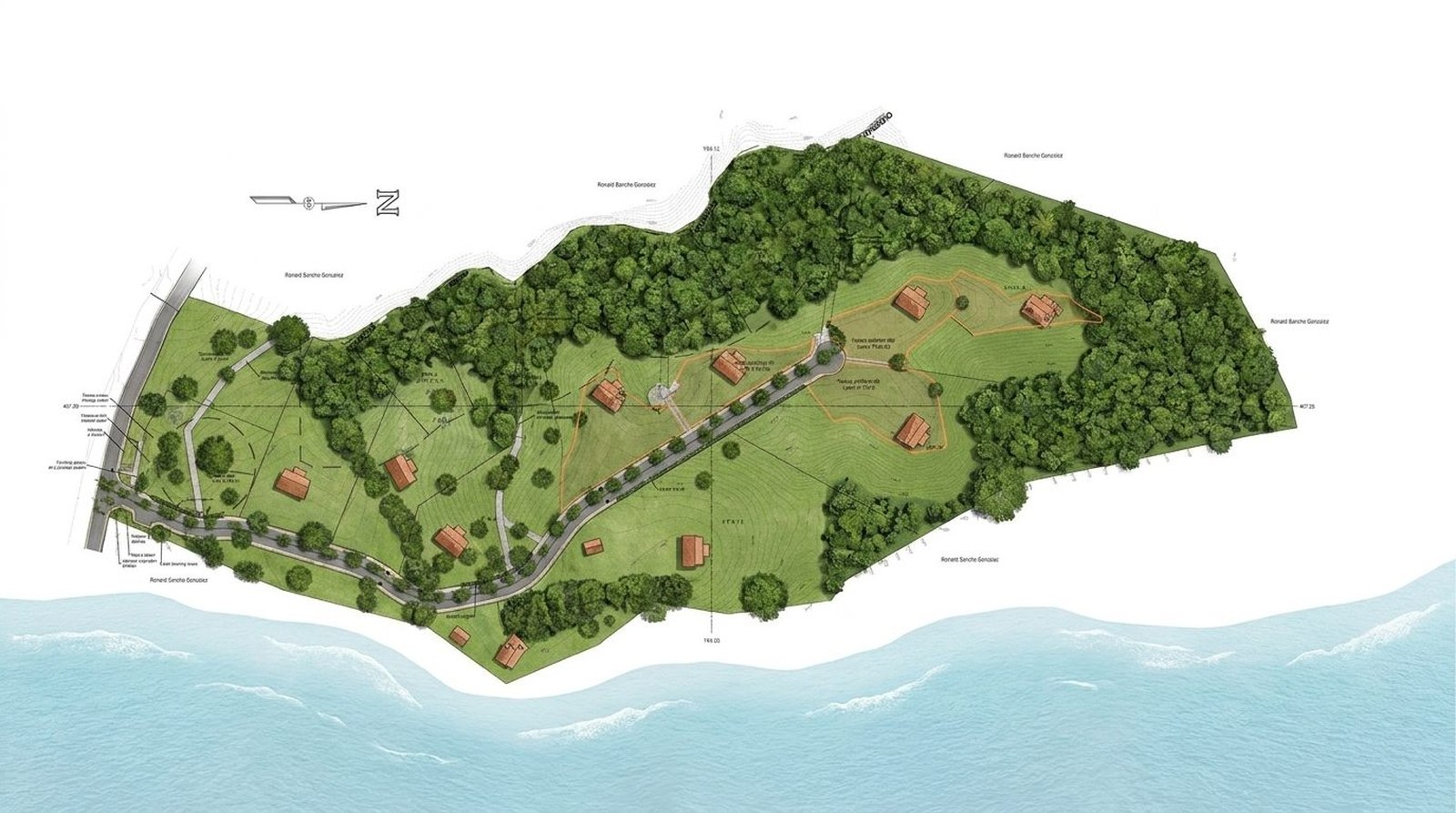
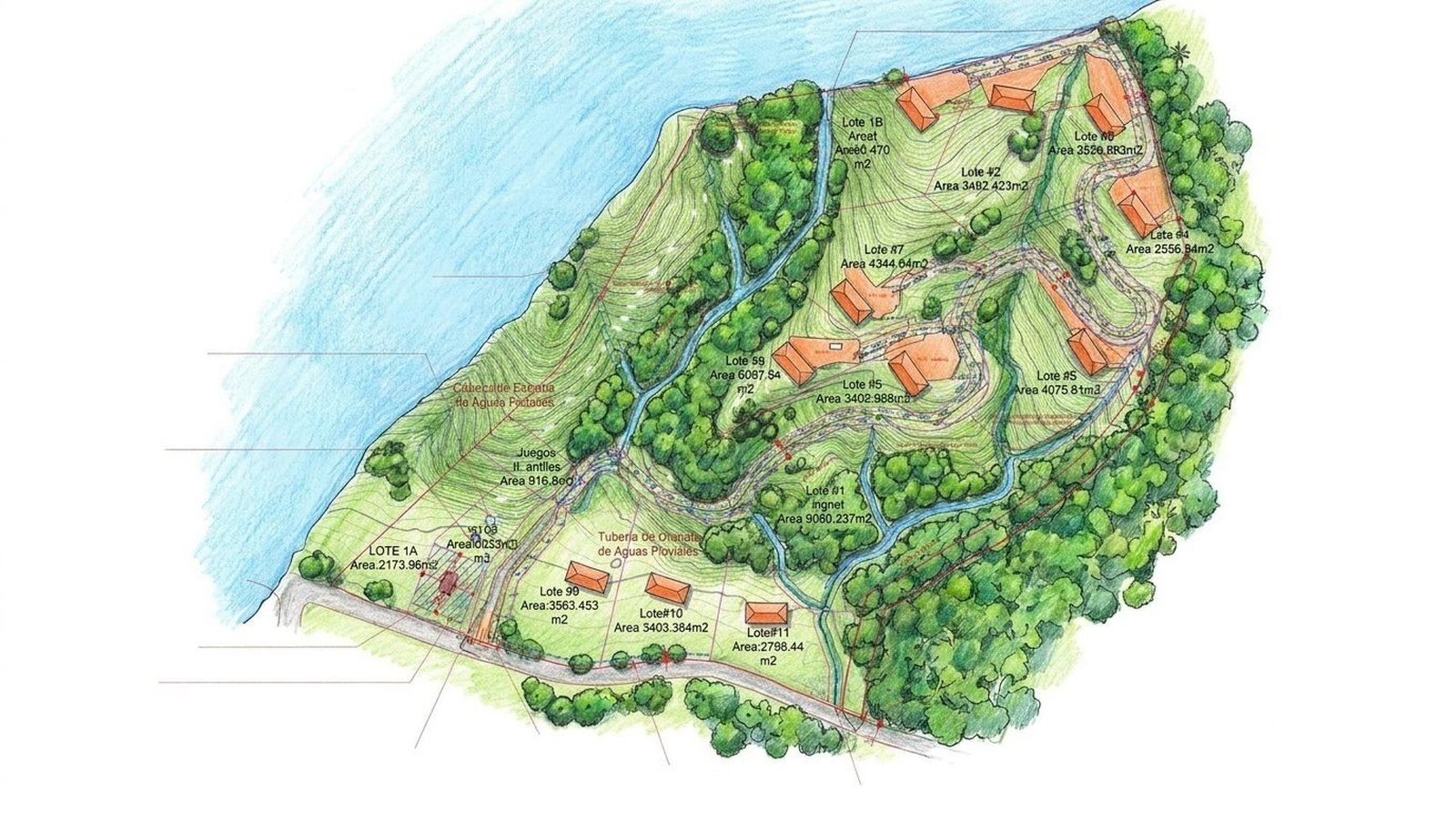
Cantomar is a beachfront horizontal condominium at Playa Brasilito, anchored by the Autograph Collection by Marriott alongside residential units. Astra divides 5.9 hectares near Playa Pelada into 19 building lots served by internal roads and green zones, with hotel and cabinas components alongside the residential lots. Río Mar places a 9,060 m² community park at the centre of a 13-lot plan on 6.5 hectares in Nosara, beside a forested ravine. Pochote holds nine lots on 6.2 hectares of Santa Teresa hillside between roughly 138 and 141 metres of elevation, keeping a forested reserve below the ridge. The Nosara Wellness Condominium distributes 48 units across eight buildings with 14 duplex houses, laid out inside standing forest canopy. Astra, Río Mar, Pochote and the wellness condominium are in active development; the rest are complete.
What the site decides
Scale changes the problem rather than only its size. On a large property, road alignment sets the grade of every lot, the reach of each service line and how much terrain has to be cut, which is why the road network is resolved alongside the lot layout instead of after it. On a small hillside property the same logic applies to drainage. Phased release adds a further layer: infrastructure is sized for the finished community and built out as each phase opens, so early phases carry capacity the later ones will need.
Two frameworks that recur
Horizontal condominiums register individually titled filial lots under a parent parcel, with roads, services and common areas held in common under Ley 7933. Setting that structure at the master-plan stage determines what can later be built and sold on each lot. Coastal land within 200 metres of the high-tide line falls under the maritime zone law, where the first 50 metres are public and the next 150 are held by concession rather than title; and the Papagayo peninsula operates under a separate ICT concession framework in which each parcel's density, setbacks and permitted uses come from an approved master plan. Both are settled before anything is designed.
What a client should expect
Expect the early work to be about the land rather than the buildings: topography, drainage, tree cover, setbacks and the mix of uses the property has to hold. Lot boundaries, road alignments and common green areas are fixed together, because each constrains the others. Permitting through the CFIA and SETENA follows the plan rather than preceding it, and infrastructure construction documents are the deliverable that turns the plan into something buildable.
Related categories: condominiums, hotels & lodges, commercial.